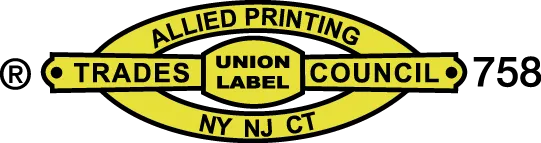
A quarter inch can change your postage. That’s the part most people don’t expect when they pick a postcard size.
Make a card a little taller or a little longer, and the Postal Service stops treating it as a postcard at all. It becomes a letter, or a flat, and the price goes with it.
Which is why picking a size is a money decision as much as a design one. Postage per card, room for your offer, whether anyone notices it on the kitchen counter. Size touches all three. Let’s go through the usual options.
Common postcard sizes and how USPS treats them
Direct Mail Postcard Guide
| Size (inches) | USPS category | What it means |
| 4 x 6 | Card | Lowest First-Class price tier |
| 5 x 7 | Letter | Letter pricing, more room |
| 6 x 9 | Letter | Letter pricing, popular for promos |
| 6 x 11 | Letter | Biggest card that stays letter-size |
| 6.5 x 9 | Flat | Works for Every Door Direct Mail |
| 8.5 x 11 | Flat | Lots of space, flat pricing |
| 6 x 6 (square) | Nonmachinable letter | Shape can push the price up |
What size qualifies for postcard rates?
Smaller than most people picture. Grab a ruler. For the card price, USPS wants your postcard somewhere between 3-1/2 x 5 inches at the low end and 4-1/4 x 6 at the high end. Thickness has a window too. Go under 0.007 of an inch, and it’s too thin. Over 0.016 and you’ve lost the card price.
So where does 4 x 6 fit? Right inside those limits, with a quarter inch to spare on the short side.
Go past 4-1/4 by 6 and you’re out. USPS charges cards that are too big at letter-size prices instead, and those oversized pieces can’t carry the word “Postcard” on them.
What happens when a postcard is bigger than 4-1/4 x 6?
It mails as a letter, as long as it stays within the letter limits. Those top out at 6-1/8 inches high and 11-1/2 inches long. A 6 x 9 or 6 x 11 card fits. So does a 5 x 7.
Push one more dimension past those numbers and you’re in flat territory. Flats can run up to 12 by 15 inches and 3/4 of an inch thick, and they’re priced differently from letters. An 8.5 x 11 card is a flat. So is a 6.5 x 9, because 6.5 inches is taller than the 6-1/8 letter limit.
Every jump costs more per piece. But the extra space might be worth it, depending on what you’re selling.
Why does a square postcard cost more?
Here’s a weird one. Two cards can be the same size on paper and still cost different amounts to mail, just because of their shape. USPS checks the ratio of the long side to the short side, and for letter-size mail it wants that number somewhere from 1.3 to 2.5.
Try it on a few sizes. 9 divided by 6 is 1.5, no problem. 11 divided by 6 is about 1.83, still fine. But a 6 x 6 square works out to exactly 1.0. Too low. USPS calls that nonmachinable, since the sorting machines can’t handle it the usual way, and that means a higher price per piece.
Square cards look great. Just go in knowing the postage won’t match a rectangle of the same size.
How much design space do you actually get?
Less than the dimensions suggest, at least on the address side.
USPS needs room for its own markings. On letter-size pieces, there’s a barcode clear zone in the bottom right corner, a strip 4-3/4 inches wide and 5/8 inch tall that has to stay free of printing. The address itself is recommended to sit within an area that runs from 5/8 inch to 2-3/4 inches up from the bottom edge, at least 1/2 inch in from each side. Add a postage indicia in the upper right, and a chunk of that side is spoken for.
On a 4 x 6, that barcode strip alone eats up roughly 12% of the address side. On a 6 x 11, it’s closer to 5%. Bigger cards leave a lot more room for a headline, a photo, or an offer next to the address. The other side is all yours either way.
How does size affect response?
Think about what happens at the mailbox. Your card lands in a stack with bills, catalogs and other postcards. A 4 x 6 tends to slide in between everything else. A 6 x 11 or 8.5 x 11 sits on top or sticks out of the pile.
More space also means room for the things that get people to act. A clear offer. A deadline. A QR code that takes them straight to a landing page, which we cover in How QR Codes on Direct Mail Can Turn Print Campaigns Into Measurable Leads. Personalizing each card with the recipient’s name or neighborhood is another option, and Variable Data Printing: How Personalized Print Can Improve Direct Mail Response Rates explains how that works.
The honest answer, though, is to test. Send two sizes to similar lists and see which brings in more calls for the money spent.
What size works for Every Door Direct Mail?
Here the card has to be big enough to count as a flat. So you need it taller than 6.125 inches, or longer than 11.5, or thicker than a quarter inch. Any one of those will do. The top end is 12 x 15 inches. In practice, you’ll mostly see EDDM cards at 6.5 x 9, 6.5 x 12, 8.5 x 11 or 9 x 12.
The nice part about EDDM? No list to buy. You pick the mail routes, and every home on them gets a card addressed to “Postal Customer.” The catch is the paperwork. The post office has strict rules about how these mailings get prepared and dropped off, and that’s the part we take off your plate. We do the EDDM prep in-house, along with presorting and CASS address correction, through our Direct Mail service. If we’re preparing your mailing, our indicia is yours to use. No charge for that.
Frequently asked questions
Which postcard size gets the cheapest USPS rate?
Usually 4 x 6. As long as the card stays at or under 4-1/4 x 6 inches and no thicker than 0.016 inch, it gets card pricing.
Does a 6 x 9 postcard mail as a letter?
Letter. Its 6-inch height is under the 6-1/8 limit, and 9 inches is well under 11-1/2.
Why do square postcards cost more to mail?
It’s all about the shape. Divide the long side by the short side on a square and you get 1.0, below the 1.3 minimum. USPS then prices it as nonmachinable.
What size do I need for EDDM?
Something flat-size. 6.5 x 9 is a popular pick, and 8.5 x 11 works too. The rule is: taller than 6.125 inches or longer than 11.5 inches.
Got a mailing coming up? Kintech, in Belmar, has been printing and mailing for businesses around Monmouth and Ocean County since 1998. Call 732-280-6245 or request a quote. You can also look through our Graphic Design, Mailing Lists and Printing services, read Direct Mail Printing NJ: Response Rates & Design That Works, or contact us.